Resilience Policy Toolkit
University of Miami Office of Civic and Community Engagement
Role: Research Assistant, led toolkit development | Dates: January 2020 – January 2021
Overview
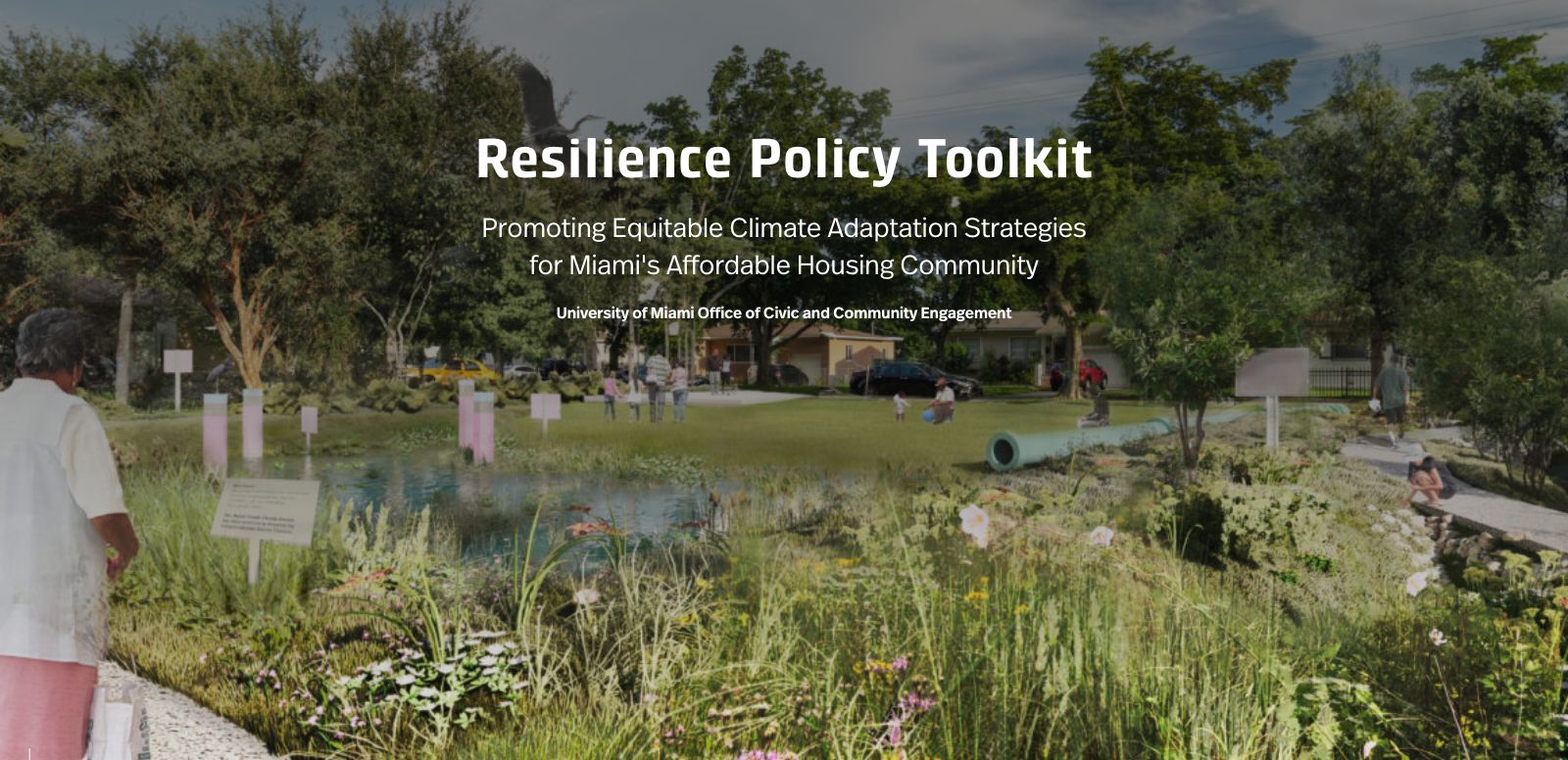
The University of Miami’s Office of Civic and Community Engagement partnered with Miami-Dade County municipalities on affordable housing and climate resilience. I led development of the Resilience Policy Toolkit. It is a guide for cities on nature-based solutions that reduce climate risk in vulnerable coastal neighborhoods.
What the toolkit covers
| Solution | Hazard it addresses |
|---|---|
| Retention-pond parks | Flooding and stormwater |
| Urban tree canopy | Extreme heat |
| Natural coastal barriers (mangroves, dunes, reefs) | Hurricane and storm-surge impacts |
My contributions
- Led development of the toolkit. I synthesized peer-reviewed research and municipal best practices into guidance for each solution.
- Supported the toolkit’s adaptation cost-benefit analysis, which compared four building types across seven Miami neighborhoods.
- Contributed the flood zone, storm surge, and sea-level-rise layers to the Miami Affordability Project, an interactive map of affordable housing need built by the University’s Institute for Data Science and Computing.
Impact
The toolkit and map were delivered to the City of Miami and used in its housing and resilience policy work. They were part of a wider body of University of Miami work that helped cities and the county bring nature-based resilience projects to vulnerable coastal communities.